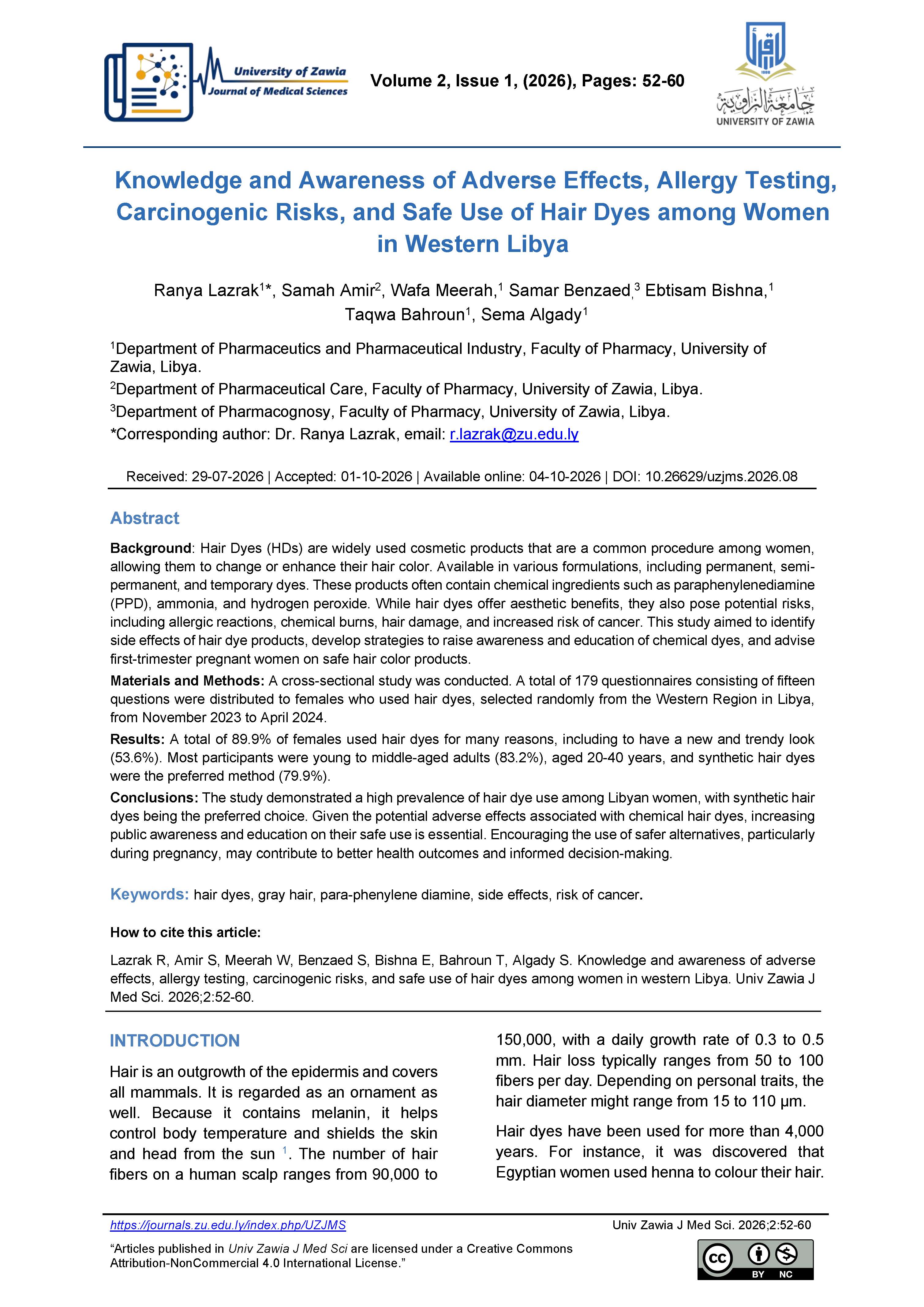
Knowledge and Awareness of Adverse Effects, Allergy Testing, Carcinogenic Risks, and Safe Use of Hair Dyes among Women in Western Libya
DOI:
https://doi.org/10.26629/uzjms.2026.08Keywords:
Hair dyes, Gray hair, Para-phenylene diamine, Side effects, Risk of cancerAbstract
Background: Hair Dyes (HDs) are widely used cosmetic products that are a common procedure among women, allowing them to change or enhance their hair color. Available in various formulations, including permanent, semi-permanent, and temporary dyes. These products often contain chemical ingredients such as paraphenylenediamine (PPD), ammonia, and hydrogen peroxide. While hair dyes offer aesthetic benefits, they also pose potential risks, including allergic reactions, chemical burns, hair damage, and increased risk of cancer. This study aimed to identify side effects of hair dye products, develop strategies to raise awareness and education of chemical dyes, and advise first-trimester pregnant women on safe hair color products.
Materials and Methods: A cross-sectional study was conducted. A total of 179 questionnaires consisting of fifteen questions were distributed to females who used hair dyes, selected randomly from the Western Region in Libya, from November 2023 to April 2024.
Results: A total of 89.9% of females used hair dyes for many reasons, including to have a new and trendy look (53.6%). Most participants were young to middle-aged adults (83.2%), aged 20-40 years, and synthetic hair dyes were the preferred method (79.9%).
Conclusions: The study demonstrated a high prevalence of hair dye use among Libyan women, with synthetic hair dyes being the preferred choice. Given the potential adverse effects associated with chemical hair dyes, increasing public awareness and education on their safe use is essential. Encouraging the use of safer alternatives, particularly during pregnancy, may contribute to better health outcomes and informed decision-making.
Downloads
Published
How to Cite
Issue
Section
License

This work is licensed under a Creative Commons Attribution-NonCommercial 4.0 International License.





 | Articles published in the Univ Zawia J Med Sci are licensed under a